
The Lessons I Learned Watching My Father Lead
I didn’t learn leadership only from books or business schools — although I did study Business. It just wasn’t at a high-end institution with marble foyers and polished case studies. It was closer to what I now think of as the school of hard graft.
Over the decades since, I’ve spent most of my working life in HR and executive leadership roles. I’ve been responsible for leadership development, culture, governance, and people strategy. I’m fluent in modern leadership models, competency frameworks, and the language of HR. I use it every day.
But my father would often say, quietly and without flourish:
“There’s no substitute for good attitude and experience.”
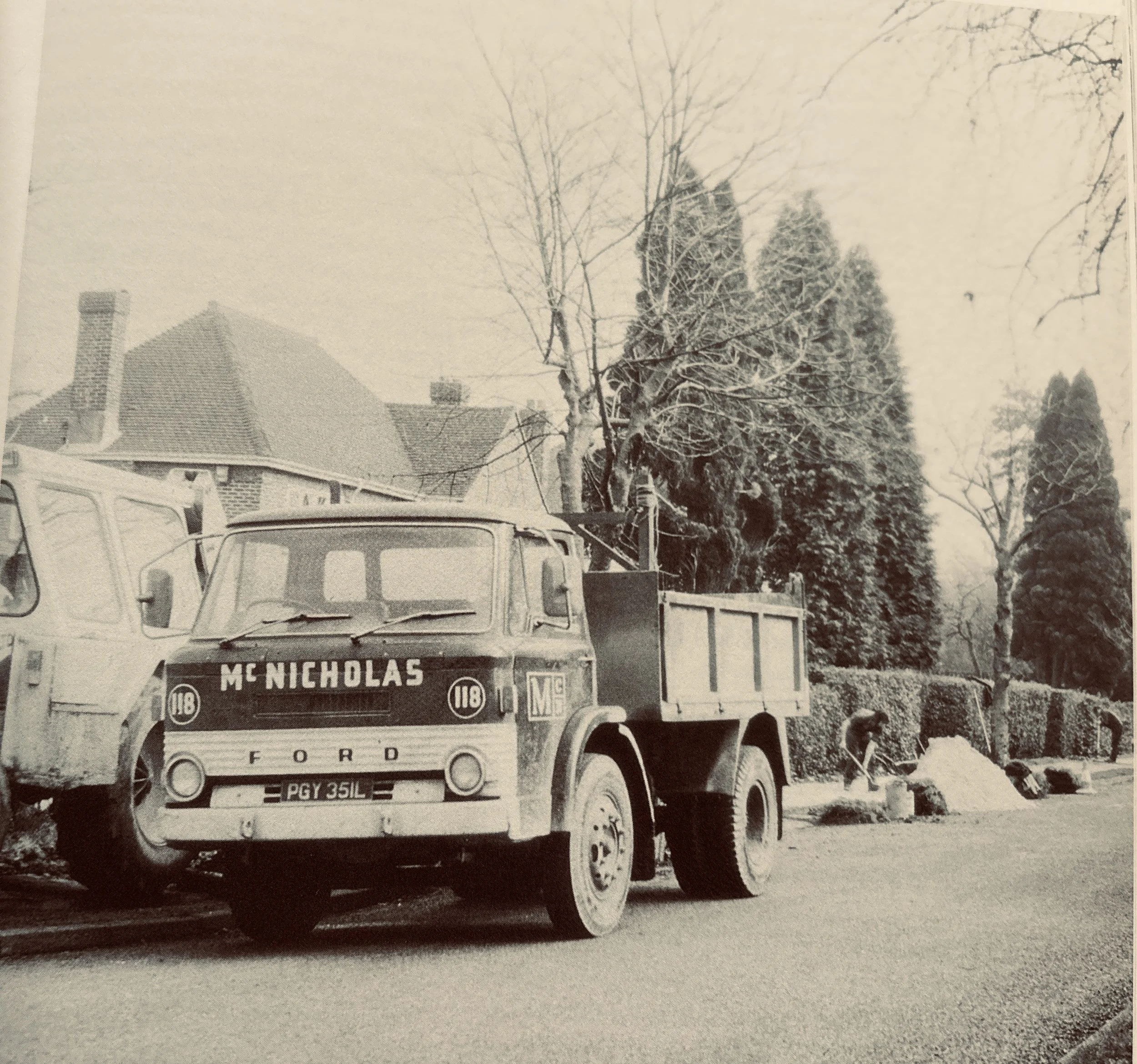
He left school at fourteen. No higher education. No formal leadership training. And yet, by the time McNicholas was sold in 2017, the business had a turnover of around £230 million and employed roughly 2,000 people. I was an Executive Director and HR Director for four years, having first joined the company as a summer holiday job at fourteen and then full-time in 1985.
Recently, I found myself leafing through The Men Who Built Britain by the historian Ultan Cowley — a book rich with sepia photographs and stories of Irish navvies, post-war rebuilding, and an industry forged in judgement, risk, and physical labour. It’s nostalgic, certainly. But more than that, it’s contextual.
I didn’t want to write about the past for its own sake. I wanted to explain where my own understanding of leadership comes from — and why, even after decades immersed in modern HR thinking, the lessons I absorbed watching my father still hold.
Because leadership today may sound more polished.
But its foundations haven’t changed nearly as much as we like to think.
Leadership before it had a name
Long before leadership was formalised into frameworks and competencies, it was practical and visible. Vehicles carried the company name through residential streets. Work was done where people lived. Reputation travelled faster than paperwork.
If something went wrong, there was no place to hide.
That visibility shaped behaviour. Decisions were made carefully. Contracts were sometimes declined. People were protected from work that looked profitable but wasn’t right. I didn’t see strategy documents. I saw judgement in action.
“Less brawn, more brain”
By the late 1970s, construction was already shifting. As Cowley describes, the smartest contractors learned that brute force and relentless pace were no longer enough. Survival depended on knowing when to push — and when not to.
That lesson stayed with me.
Leadership wasn’t about shouting the loudest or taking every job. It was about restraint. About choosing the right work, with the right people, at the right time. About understanding risk before it became loss.
Power, decency, and the work
The industry my father inherited had learned its lessons the hard way. Wet clay. Collapsing trenches. Demolition before rebuilding. People died. Everyone knew someone who hadn’t come home.
In that context, leadership was never abstract. If you got it wrong, someone paid.
What marked out the leaders people respected wasn’t authority, but intervention. Knowing when to slow things down. Knowing when to step in. Knowing that power exercised without decency corrodes organisations from the inside.
Long before I became HR Director, I understood that systems exist to stop power being exercised arbitrarily.
From instinct to stewardship
When I later stepped into executive and HR leadership roles, my job wasn’t to replace those instincts — it was to translate them.
To turn lived judgement into systems that protected people.
To turn reputation into governance.
To turn responsibility into something that could survive succession, growth, and eventually, exit.
What I had watched all along was stewardship. Quiet, practical, and long-term.
What watching my father taught me
Looking back, the lessons are simple — and hard:
Judgement matters more than bravado
Not every opportunity should be taken.Reputation is built in ordinary moments
Especially when no one thinks it’s being watched.Power needs restraint
Systems exist to protect people, not constrain them.Leadership is inherited, then refined
Each generation has a duty to carry it forward responsibly.
These lessons now sit at the heart of my work with founders, family businesses, and leaders preparing for transition or exit. Because exits are not just financial events. They are human ones.
And what survives them is rarely what’s written down —
but what was practised, consistently, over time.
